- 77
- 1
- 0
- 0
- 0


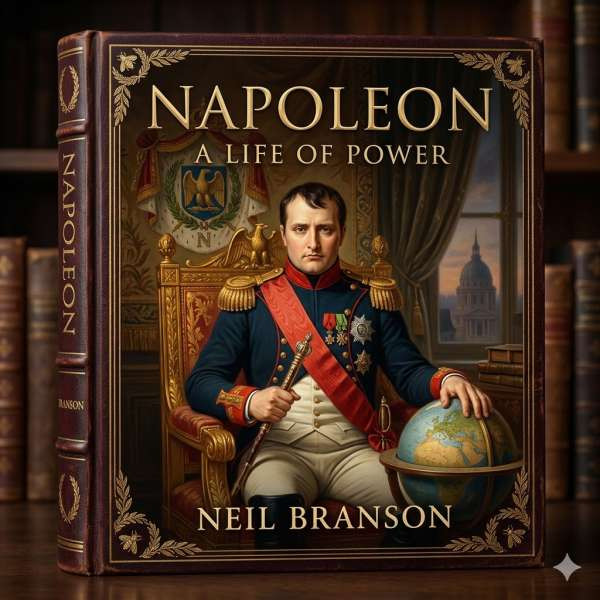
The winds over the Mediterranean in the autumn of seventeen sixty-nine were salt-heavy and unrelenting. On the island of Corsica, in a stone house in Ajaccio, a woman named Letizia Ramolino labored through a difficult birth. The air in the room was close, scented with dry herbs and the sharp tang of wood fires. When the child arrived, it was not the birth of an emperor, but of a son to a family of minor gentry whose status in the new French-occupied territory was precarious at best. The boy was small, dark-haired, and possessed of a temperament that would soon become famous for its restless, burning intensity.
The winds over the Mediterranean in the autumn of seventeen sixty-nine were salt-heavy and unrelenting. On the island of Corsica, in a stone house in Ajaccio, a woman named Letizia Ramolino labored through a difficult birth. The air in the room was close, scented with dry herbs and the sharp tang of wood fires. When the child arrived, it was not the birth of an emperor, but of a son to a family of minor gentry whose status in the new French-occupied territory was precarious at best. The boy was small, dark-haired, and possessed of a temperament that would soon become famous for its restless, burning intensity.
The pressure of identity defined his youth. Napoleon Bonaparte was an islander at a time when islands were being swallowed by empires. He moved to the mainland to attend a military academy in Brienne, where he was an outsider—an awkward, accent-heavy youth mocked by wealthy classmates for his lack of breeding. He retreated into geometry and history, finding in the rigid logic of mathematics and the chaotic sweeps of antiquity a structure that the social world denied him. He sat in cold, poorly lit study rooms while the French monarchy slowly hollowed itself out from within, unaware that the boy drawing maps in the corner would eventually be the one to dismantle their world.
The tension broke in the streets of Paris. The revolutionary government was crumbling, caught between the demands of the mob and the threat of foreign invasion. It was October of seventeen ninety-five, and a Royalist insurgency was preparing to storm the Convention. The politicians were desperate. They needed a commander who would not hesitate to turn cannons on the people of Paris. Napoleon was summoned, and in a few hours of calculated violence, he cleared the streets with a "whiff of grapeshot," as he would later describe it. It was the first moment his name became synonymous with the survival of the state.
He stood in the Tuileries palace on the night of December the second, eighteen hundred and four. The air inside the cathedral of Notre-Dame was heavy with incense and the collective breath of thousands. The crown was there, resting on the velvet cushion, a physical weight of gold and potential. The Pope waited, expecting to perform the ancient rite of anointing an emperor, but Napoleon moved first. He reached out, his hand steady, and took the crown himself. He placed it upon his own head.
It was done. The Republic was buried beneath the weight of a new crown. He did not become a king by divine right; he became one by the force of his own will, a man who had declared himself the sovereign of his own destiny. In that moment, the old hierarchy of Europe shattered, replaced by a meritocratic ambition that recognized no limits.
The breaking point was not a battle, but the long, agonizing retreat from the frozen plains of Russia in eighteen twelve. It was the last time the Grand Army would march as an invincible force. The men who had conquered Vienna, Berlin, and Madrid were reduced to scavengers, picking through the snow for horseflesh and leather. Napoleon rode in a carriage, the glass windows frosted over, watching the ghost of his empire vanish in a white, endless void. The realization had dawned on him: he could command the earth, but he could not command the winter.
The aftermath of that collapse rippled across every border in Europe. In the village of Leipzig, the fields were turned into a graveyard where the future of the continent was decided by the collision of millions. The defeat shattered the illusion of his godhood. Following his abdication and brief exile to Elba, he returned for the Hundred Days, a final, frantic grab at power that ended in the rain-soaked mud of Waterloo. The era of the revolutionary crusade was over, and the era of the Congress of Vienna began, an attempt by the old guard to force the genie of liberalism back into its bottle.
The line from that cold room in Ajaccio to the modern state is direct and inescapable. The legal codes he authored, the administrative structures he built, and the very concept of the nation-state he championed continue to serve as the architecture of governance. Every time we see a map that defines people by their borders rather than their kings, we are seeing a remnant of his ambition.
We live in the shadow of his choices. It is a haunting thought that the fate of the modern world was forged in the mind of a young boy on a rocky island who decided that he was not a subject, but a force of nature. The path he cleared remains, a jagged, brilliant mark on history that refuses to fade. The silence of the island of Saint Helena, where he eventually perished, is the final, quiet end to a life that had been defined by the roar of cannons and the frantic, beautiful search for glory.
Lyssnade nyligen av

Inga kommentarer hittades
Fler spår